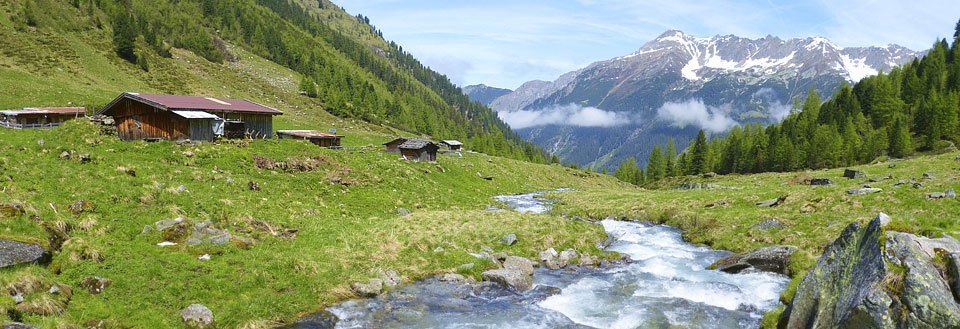
Austria, the alpine country, is the place for you if you want the challenge of the open air. The country offers some of the best ski resorts in Europe, hikes in the Alps and strikingly beautiful scenery. If the fresh air gets too much you can enjoy cultural life of the cities - they offer unforgettable musical experiences, striking architecture and much, much more.
Republik Österreich
Vienna (1,606,843) (1998)
83,858 square kilometres
German is the official language in the country.
Roman Catholic
8,139,000
Federal republic
Austria lies right in the bosom of Europe and has no coast line. The country borders Switzerland, Liechtenstein, Germany, The Czech Republic, The Republic of Slovaky, Hungary, Slovenia and Italy. The landscape is mountainous and almost half of the country is covered by forest. Austria's highest mountain is Grossglockner at 3798 metres high. The Danube River is dominant - flowing 360 kilometres through Austria.
A visit to Austria can be enjoyed all year around. The wonderful scenery can be enjoyed in the summer months of May to September, whilst the winter months offer great skiing. If you want to see nature change colour, both spring and autumn are good times to visit.
Recommended Reading
Lonely Planet Austria
Frommer's Austria
Fodor's Austria
Austrian Schilling, Euro
In case of emergency in Austria dial:
Ambulance (144)
Police (133)
Fire Department (122)
At many hotels and restaurants the waiters add a service charge on the bill, but usually they expect a small additional tip. Taxi drivers expect about a ten per cent tip.
When it is 12 noon in the UK, it is 1 pm in Austria.
In Austria they use the following units of measurement:
Weight: kilo
Distance: metre
At religious sites you should follow the instructions at the site and not be too impetuous. Otherwise there are no special rules of photography.
The water in Austria is clean and it is safe to drink tap-water.
In Austria they use the following power source:
220 volts AC, 50 Hz
In some Austrian regions the population can seem rather formal at first meeting. They greet you by shaking your hand and you should avoid using first names at a first encounter. Note also - before you throw yourself into long discussions - that the church is highly respected in Austrian society.
Shops are open from 8-9 am to 6 pm (monday-friday), but usually close a few hours for lunch. On saturday the shops are open from 8 am to 1 pm, except for the first saturday in every month, when shops close at 5 pm.
Office hours are 8 am to 12.30 pm and from 1.30 pm to 5.30 pm (monday-friday).
Traditional Austrian meals include Wiener Schnitzel (veal cutlets), boiled steak, veal liver with vegetables and different kinds of pork. Most meals serve rice or potatoes with the flesh. Dessert is often pie or Apfelstrudel - a sweet cake with apple sauce. In Austria they produce good and cheap wine. Otherwise they drink several varieties of imported beer. However the country is also known for its Jägertee, a tea with Austrian schnapps - mainly served at the ski resorts.
Conditions for disabled persons are continually improving in Austria. Quite a few hotels and attractions have facilities for disabled persons now and several travel agencies arrange tours for disabled people who cannot easily transport themselves. For further information please contact:
Verband der Querschnittgelähmten Österreichs
Brigittenauer Lände 42
A-1200 Wien
Phone +431356325
New Year's Day, 1 January
Twelth Night, 6 January
Labour Day, 1 May
Virgin Mary's Day, 15 August
National Day, 26 October
All Saint's Day, 1 November
Christmas Day, 25 December
Boxing Day, 26 December
Easter, March or April
Whit Sunday, Whit Monday, May or June
Corpus Christi, May or June
There are more than five hundred camping sites in Austria, which makes it easy to use this kind of accommodation when you travel the country. Most camping sites have good standards with facilities such as showers, shops and playgrounds.
There are hotels of all categories in most Austrian cities. Hotels are categorised with one to five stars - with five-star hotels the most luxurious. During the summer months you should book in advance as the hotels are quickly fully booked.
There are 'Gasthofs' all over Austria. They are often run by a family and are simply furnished. 'Gasthofs' are a good place to stay if you want to meet with the locals.
You can find hostels all over Austria and it is one of the cheapest way to lodge in the country. In order to stay at a hostel you have to be a member of the International Youth Hostel Association. During the summer months it is wise to book in advance.
If you want to lodge in a less traditional way then you will have plenty of opportunity to do so in Austria. It is possible to stay overnight at a large farm - often with breakfast included. Moreover it is also possible to stay in private rooms at many places in Austria - something which is usually both cheap and comfortable. Several Austrian castles and old breweries have been converted into luxury hotels and there you have accommodation in fascinating historical surroundings.
There are domestic flights to all of the major cities in Austria. There are several airlines and all destinations are regularly serviced.
Austria has a well-developed bus transport network Both public and private companies service short and longer distance routes, so it is a good idea to check fares before you buy your ticket.
The railway network in Austria is elaborate and efficient and there are more than 5800 kilometres of track in the country. The trains are in good condition - they are fast and regular. It is an efficient way to travel and they provide you with a great view of the beautiful scenery as you go.
There are quite a few taxies in most major towns and cities. In the cities the taxies are metered, while you often pay a fixed fare for a certain distance in the towns.
It is possible to rent a car in all cities as well as at most airports. You have to be 18 years old to drive a car in Austria.
Ferries and tour boats sail on the Danube river - but they operate primarily in the spring and summer months.