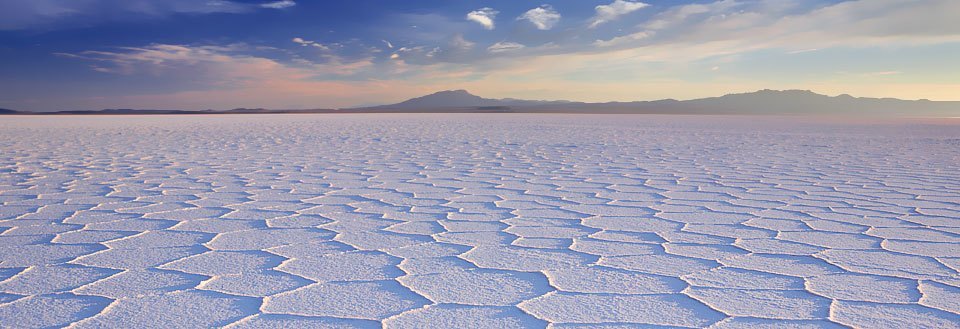
Ancient Indian culture, incredible natural scenery, the towering peaks of the Andes and the ruins of ancient civilisations.. Thses are just some of the experiences that await the traveller in this beautiful country situated on the roof of South America.
Bolivia
The administrative capital is La Paz and Sucre is the judicial capital.
1,098,581 sq. km
Spanish is the 'official' language, but most Indians speak either Quechua or Aymará.
Roman Catholic
7,767,000 (1997)
Republic
Bolivia shares borders with no less than five countries: Peru, Brazil, Paraguay, Argentina, and Chile. The country is fifth largest on the continent, and exhibits different regional climates. There are areas of tropical climate and rainforest like the Amazon Basin - with a lot of rainfall and extreme heat. Other regions have an almost perfectly temperate climate and excellent conditions for cultivating the land (such as around Lake Titicaca). Other parts of the country are covered with desert - with hot and windy conditions during the day and near freezing temperatures at night (such as around Uyuni). You can also find mountain ranges topped with snow during most of the year, and during winter there are excellent opportunities for skiing.
The Bolivian winter is from May to October and is generally dry. The wet summer is from November to April.
Lonely Planet Bolivia
South America on a shoestring
Central and South America
Boliviano (Bs)
The larger cities usually have several Internet cafés. They do a good job of advertising their services, so they are rarely hard to find.
To call for help in Bolivia you dial the number for the Tourist Police: 22-50-16. They can help you with almost any relevant problem.
Hotels will normally add a service charge to the bill. Staff at restaurants and hotels expect a 10 per cent tip. Taxi drivers usually expect 1 or 2 Bolivianos as a tip.
Bolivia is 4 hours behind Greenwich Mean Time and has no daylight savings. This means that when it is noon in the summertime in the UK it is 7 am in Bolivia, and when it is noon during the UK winter it is 8 am in Bolivia.
Bolivia uses the metric system.
There are no general rules about photography, but it is always a good idea to ask before you shoot, as especially some Indian women dislike being photographed. When you get out to the small remote communities you'll find whole tribes that dislike being photographed, so asking is always best.
You should boil water that you intend to use for drinking, brushing your teeth, or making ice cubes.
La Paz: 110/120 Volts AC/50 Hz
Rest of the country: 220 Volts AC/50Hz
There are no special rules concerning behaviour in Bolivia.
Banks are open from 8:30 to 11:30 and 14:30 to 18:30 (Monday to Friday).
Shops are open from 9:00 to 19:00 (Monday to Friday). Weekend hours vary from one store to the next.
Offices are open from 8:00 to 12:00 and 14:00 to 18:00 (Monday to Friday).
Bolivia displays great climatic variation from one region to another, so the country has a variety of different cuisine on offer. In the area around Lake Titicaca trout from the lake is a local favourite. Otherwise the dominant dishes involve beef, chicken, or fish, mostly garnished with different forms of potatoes. Potatoes are grown extensively in Bolivia. With drink - both beer and wine are produced in Bolivia, but the best known beverage is mate de coca, a tea made from coca leaves.
Bolivia is not the best country for travellers with disabilities. It can be difficult to get around; transportation facilities are often rundown and crowded with people. It is possible to travel as a disabled person in Bolivia, but you will need to be able to get around without relying too much on public transportation.
New Year's Day, January 1.
Labour Day, May 1.
Independence Day, August 6.
Day of the Dead, November 1.
Christmas Day, December 25.
Camping grounds are not abundant in Bolivia, but in some places there are quite good opportunities for pitching your tent. Especially some trekking routes and mountain areas have exceptional camping grounds. It is always a good idea to ask around in the area, and be aware that high-lying regions are prone to freezing temperatures at night.
Hotels can be found in practically all regions and cities. There is everything from the expensive, international hotel to cheaper, less luxurious establishments. Note that many hotels routinely add a 25 per cent service surcharge.
In and around La Paz, Cochamba, and Santa Cruz there are numerous guesthouses, mostly offering good facilities at reasonable rates.
Hostels at all price levels and standards are found all over Bolivia. It often pays off to look around and haggle a bit about the price. It is generally not hard to find a room, but in the weekends and holidays in La Paz accommodation fills up quickly, so it can be a good idea to book early when possible.
Due to the geography of the country the easiest way to get around is to fly. On the other hand the cheapest way to get around is by bus. Buses of an erratic standard service just about every destination in Bolivia. Lastly there are trains running on specific routes. However, you should be aware that the trains are often very slow and in poor condition.The simplest form of transportation in Bolivia really is flying. All of the larger cities are serviced, with the primary airportsibeing in La Paz and Santa Cruz
There is a bus service in almost every town in Bolivia. They often run at night, so there is not much opportunity to see the countryside during the drive. The buses are cheap, and many locals use this form of transportation. You have to be prepared for crowded conditions in these often poorly maintained buses. At the same time very few roads are surfaced, so a long bus trip can be an exhausting experience. But on the other hand it is a great way to meet the locals.
There are two railway networks in the country, one in the East and one in the West - neither of which functions very well. What the Western network lacks in organisation - the Eastern makes up for in chaos. Two cities will typically have a weekly connection, and delays and unscheduled stops are more the rule than the exception. But then again the trains are great for personal interaction with local Bolivians.
Taxis are found in all sizeable Bolivian cities, either in the form of regular cabs or minibuses. They don't drive by a taximeter, so it is a good idea to agree on the fare before the ride. It's easy to hail a taxi in the street, and sharing is common.
Rental agencies are based mostly in La Paz and Sucre. It is usually a straightforward affair to rent a vehicle. It costs more than the buses, but you can drive during the day and it definitely gives you more freedom.