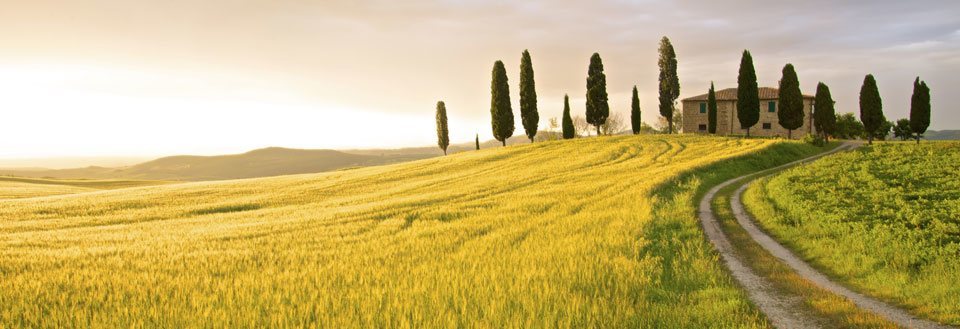
Italy is perhaps the most interesting "boot" in the world. Ancient Roman ruins, beautiful architecture and the many famous pieces of art are certain to satiate any tourists interested in culture. And those unconcerned with such attractions can indulge in fashion (and models) instead. Italy is blessed with perfect conditions for hiking, skiing, and bicycling, which should interest the energetic traveler. Italy is also home to some of the best European football. If you are ever fed up with the many sights and attractions, you can always relax in one of the many restaurants, where the food and the wine are considered by some to be without equal.
Repubblica Italiana
Rome (2.6 million)
301,320 km2
Italian, German, and a great number of different dialects.
Roman-Catholic
57.6 million
Republic
The Southern European country of Italy is shaped like a gigantic boot. The Alps separate the country from France, Switzerland, Austria, and Slovenia in the north. Italy is generally rather mountainous - which makes the country the perfect place to go if you are planning on a holiday on skis. Apart from this - lowlands rich in vegetation dominate large parts of the country. There are also myriad islands scattered in the sea surrounding Italy - among these the famous island of Sicily off the southern coast of the country.
Italy can be visited all year around. During summer the beaches are crowded - and during winter the ski resorts are the most popular attraction. If you want to enjoy both the sunny beach and the snow capped mountains, then Italy can offer both during the summer months as the highest mountains in the country are dressed in perennial sparkling snow.
Lonely Planet Italy
Fodor's 2001 Italy
Up to now only the bigger cities in Italy can provide you with access to the Internet. As a general rule the cities and towns in northern Italy are more advanced than those in the southerly regions when it comes to technological infrastructure like the Internet.
In case of emergency, call the following numbers:
Ambulance: (113)
Fire Department: (115)
Police: (112)
It is not normal procedure to tip in Italy.
When the time is 12:00 p.m. in England (GMT), it is 01:00 p.m. in Italy.
In Italy, the following weight and measure units are used.
Weight: Kilos
Length: metres
Cubic content: litres
Always ask for permission before photographing people, especially in the southern part of the country where the locals haven't yet got used to the influx of tourism. Furthermore, you should be careful when taking pictures in religious buildings.
In the main it is fine to drink the tapwater in Italy. If the water is not drinkable you will see a sign saying 'acqua non potable' - which means that the water is not safe to drink. The Italians themselves prefer bottled water - it is available almost everywhere.
In Italy, the following power sources are used:
220V AC, 50Hz
When visiting Saint Peter's Church in Rome, your legs have to be covered from the waist to the feet. If they are not, you won't be permitted admission to the church. This rule is common in most of the churches and other sacred places in Italy.
The offices are open between 08:00/09:00 a.m. and 03:00 p.m. and again between 03:00 p.m. and 06:00/07:00 p.m. (Monday - Friday). Some companies have adopted the model of northern Europe with business hours between 09:00 a.m. and 05:00 p.m. without Siesta.
The shops are open between 08:30/09:00 a.m. and 03:00 p.m. and again between 03:30 p.m. and 07:00/08:00 p.m. (Monday - Friday). Some of the bigger supermarkets are open all day, and several shops and stores are open on Saturdays.
It has often been said about Italian cuisine that it is among the best in the world. A Frenchman may dispute such a statement, but Italian cuisine is certainly of a high standard. However Italian wine is very largely overshadowed by French, which is perhaps a little unfair as much wine from the various Italian regions is of an outstanding quality. Also of note is the sparkling wine called Lambrusco that is produced in the country.
The facilities for the disabled are not of a high standard in Italy. However, during the last couple of years several hotels and museums have upgraded their standards so that it is now possible for them to accommodate disabled guests and visitors. At the same time more and more travel agencies are arranging trips to Italy for the disabled.
New Years day, 1st January
Twelfth Night, 6th January
The liberation of Italy, 25th April
Labor Day, 1st May
The Assumption, 15th August
All Saints, 1st November
Feast of the Assumption Conception, 8th December
Christmas Day, 25th December
Feast of Santo Stefano, 26th December
Camping is very popular in Italy, and there are countless camping sites throughout the entire country. At the bigger camping sites, it is possible to rent tents and caravans.
There are a great deal of hotels in Italy, and almost every town has more than one. The hotels are rated between one and five stars, which makes it possible to find everything from luxury hotels to small cheap rooms with a shower. Often it is a good idea to book a room in advance because of the high demand.
There are quite a few hostels in Italy. They can be found pretty much everywhere, and are a fine and inexpensive type of accommodation.
Along the motorways and the other major roads you can find a number of motels with fairly inexpensive rooms . You can also find so-called "tourist villages" (often in connection with the different tourist resorts) where rooms are available. Rented villas and apartments are popular types of accommodation as they provide you with a certain degree of freedom and flexibility.
Domestic flights are available between all the major cities of Italy - but they are relatively expensive.
There is an extensive bus route-system connecting the different cities and major towns in Italy. It is inexpensive to go by bus, but not always very efficient.
Italy has an extensive railway network which connects up the entire country. It is cheap to go by train, and you can buy a ticket which allows you to use the trains as much as you like over a certain period of time.
There are taxis in all of the cities and towns of Italy.
There are car rental companies in almost all of the cities in Italy. Both the bigger international companies and the smaller local ones are represented. You should be aware however that Italians are not the sanest drivers in the world.